

There is a sentence I hear with surprising frequency working in this industry
“It was beautiful… the only thing is it was FULL of Americans.” (said with annoyance)
Often, amusingly, it’s also said by an American.
I’ve probably said some version of it myself. And after nine days traveling through Italy recently (four hotels, four very different interpretations of Italian hospitality, and plenty of time spent observing my fellow guests around pools, breakfast tables and beach clubs) I started wondering what we actually mean when we say it.
Is it snobbery? Sometimes, I think it is.
There is definitely a type of traveler who wants to believe they have discovered somewhere other people haven’t. Being surrounded by other Americans somehow ruins the fantasy that you have found the real Italy. You want the hotel full of elegant Italians and a smattering of Europeans, not a couple from Texas comparing notes on the Four Seasons they stayed at last year.
There is a status element to travel that I think we should be honest about. Sometimes “I don’t want to be surrounded by Americans” really means, “I don’t want to be surrounded by people exactly like me, because then this doesn’t feel quite as exclusive.” And something about that feels a bit silly to me.
I am American. I’m not going to cosplay as European because I live in London now. And I don’t think my experience of Italy becomes inherently less meaningful because the person sitting next to me at breakfast happens to be from Chicago. But after a recent trip to Italy, I realized there is something I don’t particularly want to be surrounded by.
It just isn’t Americans. It’s bad travelers.
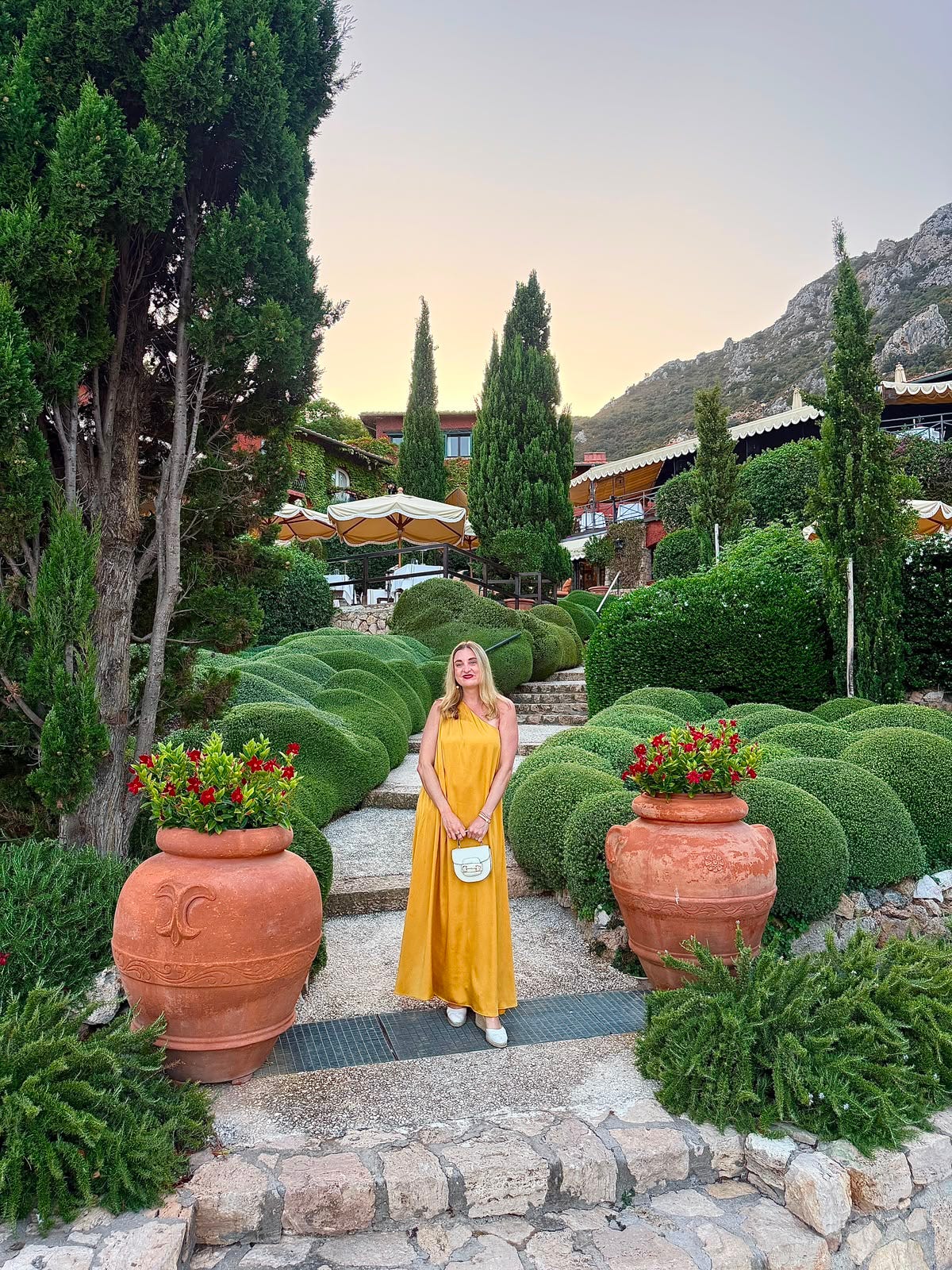
At Il Pellicano, I met an American man who was probably in his sixties. I know almost nothing about him. I couldn’t tell you what he did for work, where he lived, where his children went to school, or which hotels he had visited before. Which, in retrospect, was exactly why I liked him.
He was one of those naturally convivial people who seemed truly delighted by other humans. I watched him introduce himself to people, shake hands, ask questions. As he was leaving, he stopped to say goodbye to another couple he had met and wished them “a long, happy and prosperous life.” It was wonderfully earnest. And actually, wonderfully American.
Americans can be exceptionally good at this. We’re open. Enthusiastic. Unselfconscious. We’ll talk to strangers. We’ll tell you we love your dress. We’ll ask where you’re from and actually want to know the answer. Those are qualities about Americans abroad that I love.
But I heard plenty of the other kind of conversation, too. You know the one. It begins innocently enough… where are you from? Then slowly, it evolves into a strange, unspoken competition.
“Oh, we know that neighborhood. Our friend from the office lives there.”
“We loved that hotel. Although not quite as much as the one we stayed at last year…”
“Our kids go to...
“The trainer I work out with has me doing...”
Before long, nobody is really learning anything about anyone. Everyone is simply waiting for an opening to provide something “impressive” about themselves.
Where they stay. Who they know. What they do. Where their children go to school. Which other expensive places they have been.
And my question, particularly when this happens loudly enough for the surrounding six tables to hear, is:
Why? We’re already sitting at Il Pellicano. The hotel has established the socioeconomic context for us. Can we please retire from competitive luxury travel for the next hour and eat our pasta in peace?
Perhaps that is part of what people actually mean when they complain about Americans abroad. It isn’t simply that we’re loud (although, let’s be honest, we are often unnecessarily loud.) It’s that sometimes our volume seems connected to a desire to be heard.
There’s a difference between occupying a place and needing the place to notice you occupying it.
This difference followed me throughout Italy in another form: service.
To be clear, I had wonderful experiences at every hotel I visited. I also heard at least one American complain at almost every single one.
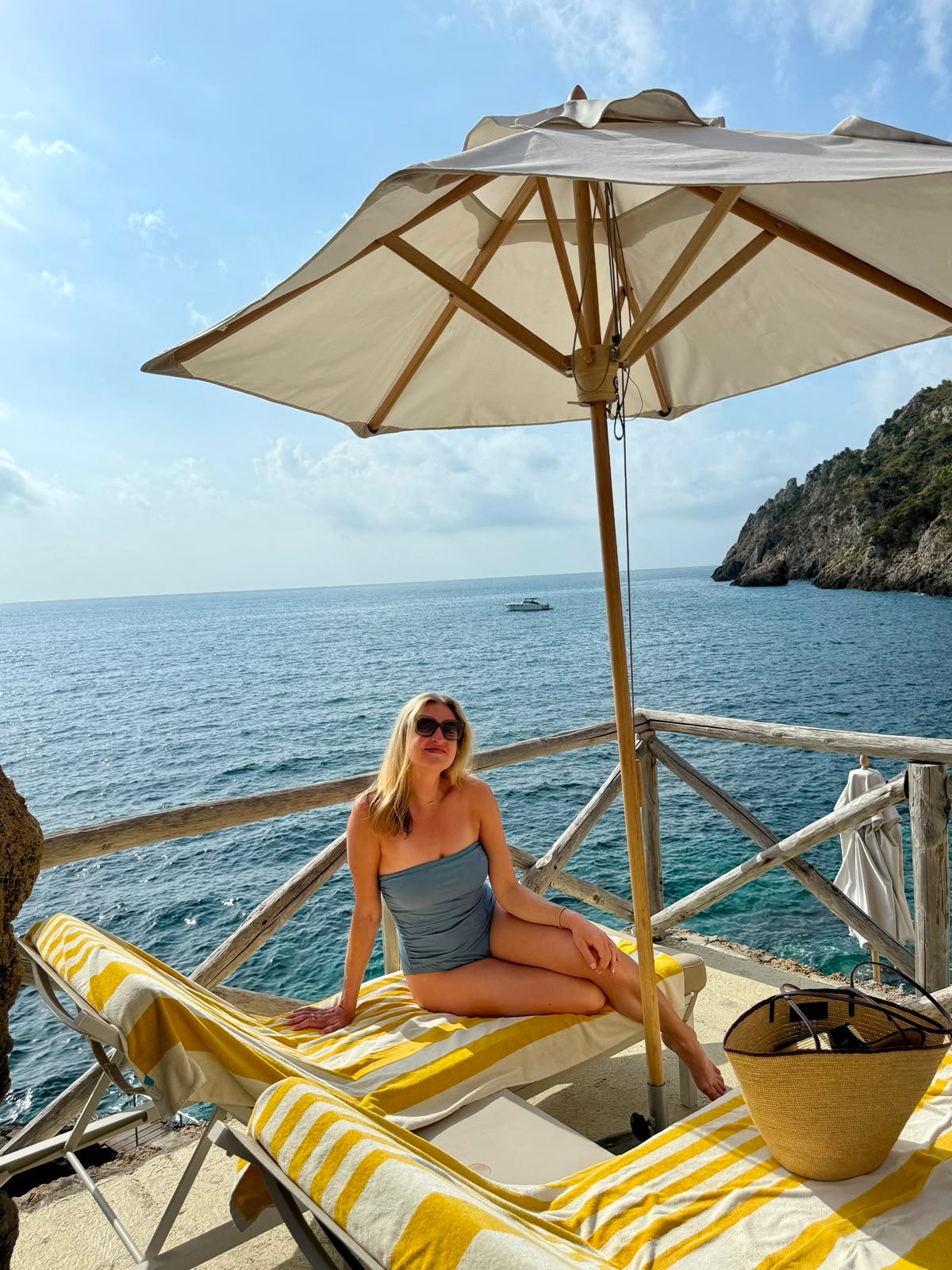
At Il Pellicano’s beach club one afternoon, the place was packed. Everyone, unsurprisingly, wanted lunch at roughly the same time. A waiter misunderstood a couple next to me and brought one of something when they had intended to order two. Was it a mistake? Yes. Was it a crisis? Based on the ensuing reaction, you might have thought so.
Elsewhere, I listened to an American man send his eggs back multiple times. Too runny. Then too hard. The white needed to be completely set but the yolk needed to remain runny. And here’s where this gets complicated, because technically… he was right. If you order eggs a particular way at a luxury hotel, you should be entitled to receive the eggs you ordered.
But being entitled to something and acting entitled about it are two different things.
There is a way to say, “I’m so sorry, this still isn’t quite what I meant…would you mind trying once more?” that acknowledges another human being is standing on the other side of the interaction.
And there is a way of communicating your dissatisfaction that ensures not only the waiter but everyone within a ten-metre radius understands that your eggs have failed to meet expectations. The latter is where you start interfering with my holiday, too.
This gets especially interesting in luxury travel because hotel rates have become extraordinary. When someone is spending over €2,000 a night on a room, “for this price...” starts to feel like a perfectly reasonable argument. And sometimes it is.
Luxury hotels should have high standards. Service matters hugely to me, not least because evaluating it is literally part of my job. Forgotten requests, indifferent staff, repeated mistakes and an inability to recover when something goes wrong are legitimate problems. But I also think we have fallen into a luxury perfection trap.
A €2,000 hotel room is not a €200 hotel room with ten times fewer human errors. You are paying for the location. The view. The architecture. The history. The design. The food. The beach club. The gardens. The staffing. The scarcity of having all of those things exist together in one extraordinary place.
You are absolutely paying for service, too. But you are still being served by humans. And humans occasionally misunderstand how many chicken wraps you wanted. For me, one of the most revealing measures of a great hotel isn’t whether anything ever goes wrong. It’s what happens when it does.
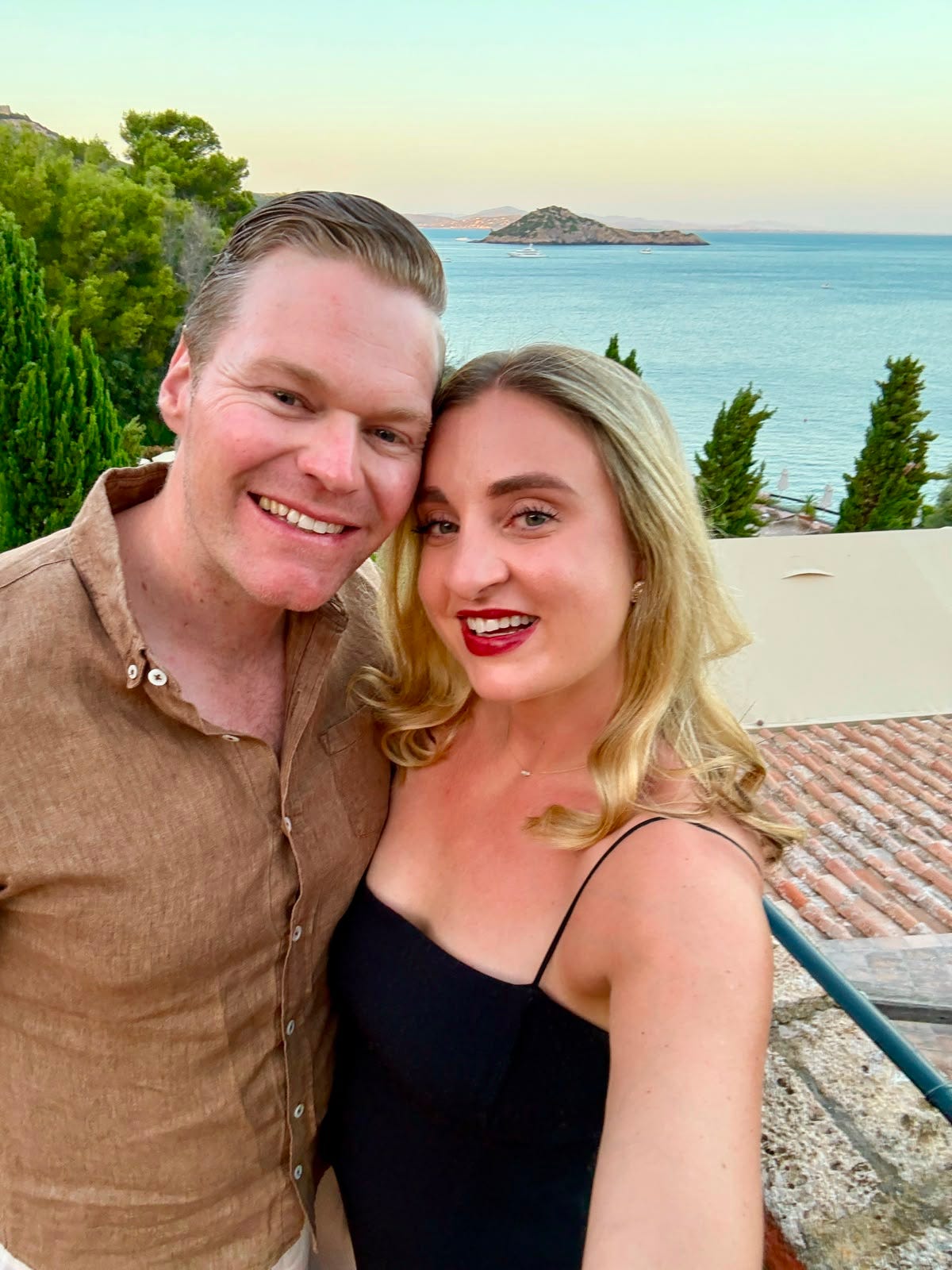
I had my own reminder of this during the trip. We were catching a train and had followed the hotel’s recommendation about when to leave. Our transfer was two minutes late. Two minutes. Almost immediately, I could feel myself becoming The American. “What if we miss the train? Why did they tell us to leave at this time? We followed their advice. There’s traffic. We’re cutting this too close.”
In the end, we arrived in time. It was tight, so hotel staff grabbed our luggage and helped us get everything onto the train quickly. We made it. I could describe that experience as: the transfer arrived late and the hotel did not leave a sufficient buffer of time for the journey to the station. Technically true. I could also describe it as: when traffic made our connection tighter than expected, the hotel team personally helped us carry our luggage to the train. Also true. Which version I choose to remember says something about me, too.
I wonder whether Americans are particularly susceptible to this because we’re not always very good at being on holiday. The culture I grew up in celebrates efficiency. Productivity. Optimization. Speed. For many Americans, holiday time is also precious. The United States does not federally mandate paid annual leave, unlike Italy and other European countries, so it makes sense that limited vacation can feel unusually high-stakes.
We only have seven days!
We flew nine hours!
We spent a fortune!
This needs to be relaxing immediately.
And so we become stressed about whether we’re relaxing efficiently enough. Coffee takes too long. Lunch takes too long. The car is two minutes late. Why hasn’t anyone brought the bill? That last one I watched happen in Rome. The American couple behind us became increasingly irritated that nobody had brought their check. Eventually the server came over and asked whether they wanted to pay. “YES!,” the man responded, clearly exasperated. Except nothing had necessarily gone wrong.
In Italy, it is normal for diners to linger and to ask for the bill when they are ready; proactively placing it on the table can carry a very different implication from the efficient American “here’s this whenever you’re ready.” Italian dining etiquette guides routinely flag this distinction for foreign visitors. The couple was interpreting a cultural difference as a service failure.
I think this is where luxury travel (and those of us who sell it) has an interesting responsibility. We are often too good at eliminating friction. Private transfer waiting at arrivals. Restaurant reserved. Bags handled. Preferred room requested. Dietary restrictions communicated. Everything confirmed, reconfirmed, and placed neatly into an itinerary. That is part of the value of working with a great travel advisor.
But perhaps our job is not to eliminate difference. Perhaps sometimes we should be doing a better job of explaining it. You’re going to Italy. Here’s something you should know about restaurants. You’re going to Japan. Here are some conventions around shared spaces.
Are you going somewhere for the first time? Ask questions. In fact, I think one of the loveliest things you can do is admit that you don’t know. “I’m American. It’s my first time here. What do Americans tend to misunderstand about Italian culture?” Imagine the conversations that question could start. Somewhere along the way, I think we’ve developed a strange relationship with the idea of authenticity.
We say we want the authentic hotel. We say want somewhere that still feels Italian. We say we want the French restaurant full of French people. We say we want the place that hasn’t been discovered. We say we want history and character and a sense of place.
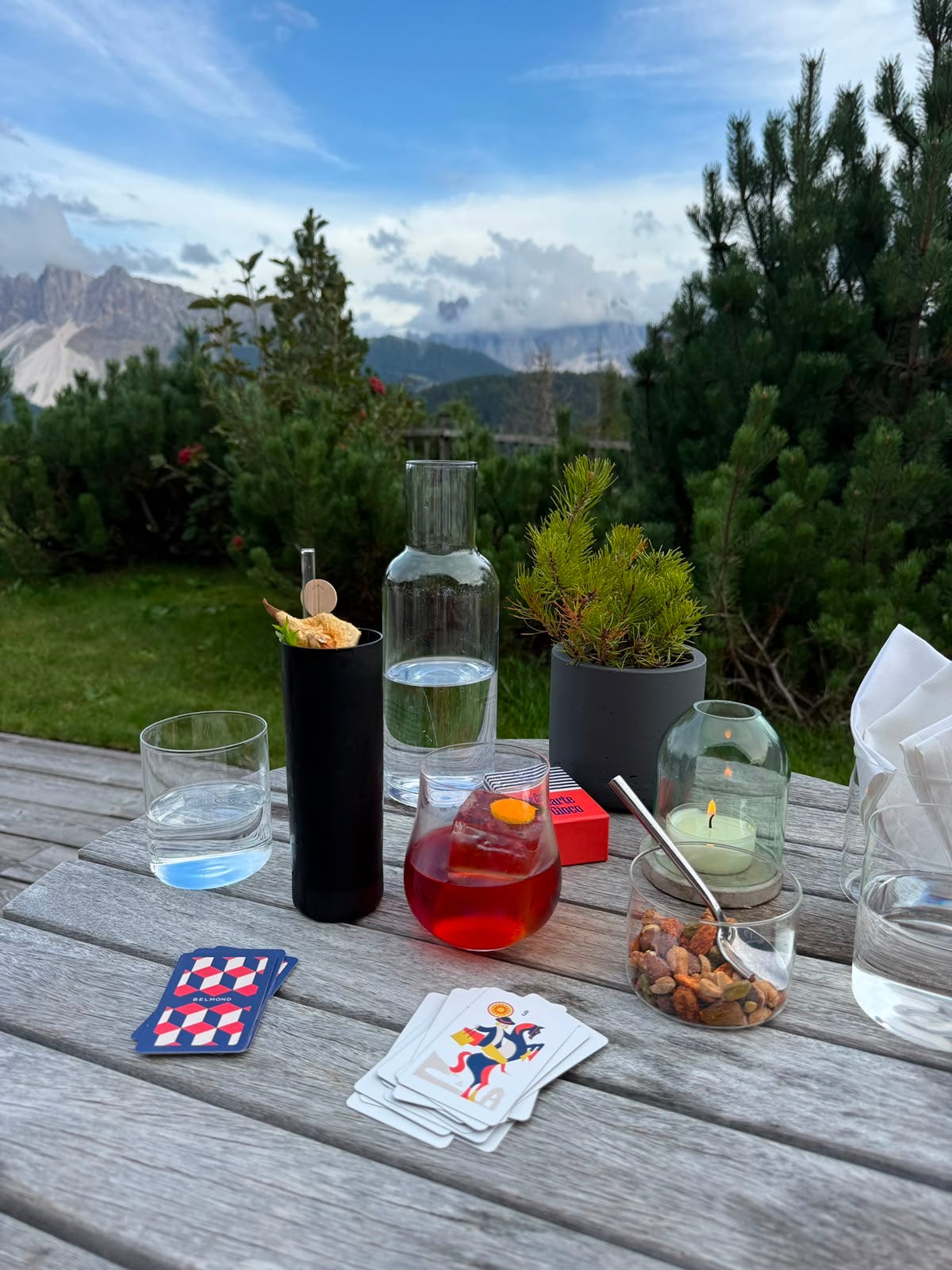
But we only seem to want cultural authenticity until it inconveniences us. We want Italy…but could Italy please bring the coffee slightly faster? We want a leisurely Mediterranean lunch…but could someone drop the bill the second we’ve mentally decided we’re finished? We want independently spirited hotels…but could they operate with the efficiency and predictability of an international luxury chain?
At some point, we have to acknowledge that culture isn’t just architecture, food, and striped beach umbrellas. It is also communication, social convention…and an entirely different relationship with time! And perhaps the privilege of luxury travel shouldn’t be that the world adapts perfectly to us. Perhaps it’s having the time and access to experience somewhere deeply enough that we are willing to adapt a little to it.
I increasingly believe that travel is a cultural exchange. Yes, when we visit somewhere, we stimulate the local economy. We pay for hotels, restaurants, guides, and drivers. And yes, in exchange, those businesses owe us what they have promised to deliver.
But I think we owe something in return. Patience. Curiosity. Cultural literacy…or at least an attempt at it. Appropriate volume. The benefit of the doubt. A willingness to pause when something frustrates us and ask whether it is actually wrong or simply unfamiliar. And, occasionally, the humility to remember that we’re on someone else’s home turf.
That doesn’t mean accepting truly bad service. It doesn’t mean romanticizing inefficiency or pretending every inconvenience is a charming cultural quirk. Sometimes the eggs really are wrong. Send them back. But perhaps don’t make the entire hotel hear about it.
Ultimately, I don’t think the point of travel is simply to see beautiful things. The best travel should change us at least a little. Maybe you come home from Italy and decide lunch doesn’t always need to be rushed. Maybe another country changes how you think about hospitality or community or food or family or beauty. Maybe you encounter a way of living that you would never choose for yourself, but understand it better by having experienced it.
Or maybe you simply learn to chill the f*ck out. God knows America could use a bit more “la dolce vita.”
I still understand the impulse behind “It’s so nice that it’s not all Americans.” But I think I’d phrase it differently now. I don’t particularly care what passports are sitting around the pool. Give me the Americans. Give me the Italians. Give me the loud, friendly sixty-something man shaking everyone’s hand and wishing strangers long and prosperous lives. I want to be around people who are curious about where they are. People who understand that having the means to travel somewhere extraordinary doesn’t make them the most important person in it. People who can have a bit of perspective when the wrong lunch order arrives. People who go somewhere different and are willing, for a little while, to be different themselves.
Those are the people I want to travel with. And, more importantly, that’s the kind of traveler I want to be. Travel is an exchange, after all. We arrive asking a place to show us something of itself; the least we can do is arrive willing to meet it halfway. And if we’re lucky, we bring a little of it home with us too.
Until next time,
Whitney
This was wonderful to read and mind opening. So thoughtful (your note about American's lack of vacation time is so insightful), and truly something that I will always remember when traveling. Thank you.
Standing applause - could not agree more.